Toy & Collectible Product Photography Montreal: Capturing the Details That Sell

If you sell toys, collectibles, action figures, or hobby products in Montreal, your photographs are your best salesperson. In a market where buyers can’t physically hold your product, toy and collectible product photography in Montreal needs to do the heavy lifting — conveying scale, detail, finish quality, and the joy of ownership all at once.

Why Toy & Collectible Photography Demands Specialized Skills

Photographing a vinyl figure, limited-edition Funko Pop, or a detailed scale model is fundamentally different from photographing a bottle of shampoo. Collectibles present unique challenges:

  • Reflective surfaces — metallic paint, glossy packaging, and chrome accents all catch light in unpredictable ways
  • Tiny details — collectors expect macro-level sharpness on facial expressions, insignia, and fine paint applications
  • Scale communication — buyers need to understand size without holding the item
  • Packaging integrity — many collectors care deeply about mint-in-box condition; packaging shots need to look pristine
  • Emotional storytelling — the best collectible photography evokes nostalgia, excitement, and desire

At our Montreal product photography studio, we have developed specialized lighting setups and post-processing workflows specifically for the collectible and toy category.

Montreal’s Collector Market: A Growing E-Commerce Opportunity

Montreal has a thriving collector community — from anime figures and comic-related merchandise to vintage board games and limited-edition sneakers. With platforms like eBay, StockX, Whatnot, and specialized collector marketplaces growing rapidly, Montreal-based sellers need product photography that competes with international standards.

Whether you’re a small boutique on Mont-Royal Avenue, an online Shopify store, or a brick-and-mortar shop in the Plateau looking to expand your digital presence, professional collectible photography in Montreal gives your listings immediate credibility.

Our Toy Photography Process

Every toy and collectible shoot at our Montreal studio follows a proven process designed for maximum e-commerce impact:

1. White Background E-Commerce Shots

For Amazon, eBay, Etsy, or Shopify listings, we produce clean white-background images that meet marketplace requirements. Every image is sharp, properly exposed, and retouched to remove dust and fingerprints.

2. Lifestyle and Contextual Photography

We create contextual shots that tell a story — a limited-edition figure displayed on a shelf, a board game set up mid-play, or a die-cast car on a simulated road surface. These lifestyle images drive emotional engagement and increase conversion rates.

3. Detail and Macro Shots

For high-value collectibles, we shoot macro details — the hand-stitching on a plush figure, the serial number on a limited edition, the articulation joints on an action figure. These detail shots justify premium pricing and reduce return rates.

4. Packaging Photography

For sealed collectibles, we photograph the packaging from multiple angles, including close-ups of condition indicators — crucial for graded or rated collector items.

Types of Toys and Collectibles We Photograph in Montreal

  • Action figures and superhero collectibles
  • Anime figures — Nendoroids, scale figures, Figma
  • Funko Pop and vinyl art toys
  • Die-cast vehicles and scale models
  • Trading cards — Pokemon, Magic: The Gathering, sports cards
  • Board games and tabletop RPG miniatures
  • Limited-edition sneakers and streetwear
  • LEGO sets and building toy collections
  • Vintage toys and antique collectibles
  • Sports memorabilia and autographed items
  • Plush toys and stuffed animals
  • Children’s educational toys and games

Technical Setup for Collectible Photography

Our Montreal studio is equipped to handle the specific technical demands of toy and collectible photography. We use a combination of softbox diffusion and tent lighting to eliminate hot spots on glossy and chrome surfaces. For macro shots, we use focus stacking techniques to achieve front-to-back sharpness that a single frame cannot capture. Our turntable setup enables 360-degree spin photography — increasingly important for premium collectibles on Amazon and specialist collector platforms.

Post-processing includes careful dust removal, colour correction to match accurate paint colours, and background removal or replacement as needed.

Fast Turnaround for Montreal Collectors and Retailers

Most e-commerce catalogue shoots are completed within 24-48 hours, ensuring you can get your listings live quickly. We understand that auction deadlines and product launch windows don’t wait — our team is structured to deliver fast without sacrificing quality.

Get Started with Product Photography in Montreal Today

Whether you’re a Montreal collector building your eBay business, a toy retailer expanding online, or an international brand needing local photography services, we’re your partner for professional collectible photography. Our studio serves clients across greater Montreal, Laval, Longueuil, and the South Shore.

Explore our related product photography services:

Ready to elevate your toy and collectible listings? Contact our Montreal studio today for a free consultation and quote.

Related Craft & Hobby Category Guides

Related reading: For collectible cards and grading-ready slab imagery see our dedicated guide on Trading Card & Sports Card Product Photography Montreal.

E-Commerce Photo Requirements for Amazon, Shopify & Etsy in 2026: The Complete Guide

If you’re selling products online in 2026, your images need to meet specific technical requirements for every platform you use. Amazon, Shopify, and Etsy each have their own rules — and failing to comply can mean your listings get suppressed, flagged, or simply underperform compared to optimized competitors. This complete guide covers every major platform’s product photography requirements so you can ensure your Montreal product photography session produces images that are immediately usable everywhere you sell.

Marketplace-spec quick reference: Amazon.ca, Shopify, and Etsy at a glance

Before getting into the platform-by-platform detail, here is the cheat sheet we hand Montreal sellers in the prep call. Our ecommerce photography Montreal workflow assumes you sell on at least one of these three.

  • Amazon.ca main image: 2000 px on the long edge, JPEG, sRGB, pure RGB (255, 255, 255) background, product fills 85% of the frame, no models outside apparel.
  • Amazon.ca A+ modules: 970 px wide hero, 300 px wide comparison thumbnails, bilingual French and English copy stacked inside the same module on the .ca marketplace.
  • Shopify CAD storefronts: 2048 by 2048 px master, WebP or compressed JPEG under 200 KB per render, 1:1 hero, alt text in both official languages where the storefront serves Quebec.
  • Etsy: 2000 px on the short edge with a 3000 px square as the safe default, JPEG, first image is a lifestyle hero rather than a white-background cutout, all ten slots filled.
  • Colour pipeline: capture and export in sRGB IEC61966-2.1, soft-proof against the marketplace renderer, never deliver Adobe RGB or ProPhoto to a marketplace upload.

Sellers running all three channels shoot once at 5000 px on the long edge, then export three sized derivatives plus a colour-managed sRGB master.

Amazon Product Image Requirements (2026)

Amazon is the most technically exacting of the major e-commerce platforms. Non-compliant images can result in listing suppression — meaning your product won’t appear in search results.

Main Image Requirements

  • Background: Pure white background ONLY (RGB 255, 255, 255). No lifestyle images, no props, no text or watermarks.
  • Product fill: Product must fill at least 85% of the image frame
  • Minimum size: 1,000 pixels on the longest side (for zoom functionality); 2,000+ pixels recommended
  • File format: JPEG, PNG, GIF, or TIFF (JPEG preferred)
  • No human models for most categories: Models are only permitted for apparel and select categories
  • No logos, text overlays, or borders

Additional Image Requirements

  • Up to 9 additional images (recommended to use all slots)
  • Lifestyle images, multiple angles, feature callouts, and infographic images are all permitted
  • Images with text overlays must be accurate and not misleading
  • Scale reference images (showing size relative to common objects) are recommended

For the full breakdown of what makes a perfect Amazon listing, see our Amazon product photography Montreal guide.

Amazon.ca specifics for Quebec sellers: bilingual A+ content and CA-marketplace main-image rules

Most Montreal sellers assume Amazon.ca runs the same spec sheet as Amazon.com. It does not. The .ca marketplace inherits the core main-image rules, but the A+ content modules, policy enforcement, and language requirements are stricter than the .com side.

On the main image, Amazon.ca still requires pure white at RGB (255, 255, 255), 85% product fill, no props, no text, no watermarks, JPEG preferred. The practical difference shows up at policy review: the .ca team is faster to suppress listings that drift off-white, so for amazon product photography montreal sessions we soft-proof every Amazon main against a 255 reference patch before delivery.

The bigger gap sits in A+ Content. Amazon.ca sellers who target both Quebec and the rest of Canada are expected to publish A+ modules in French and English. The cleanest pattern we deliver is a 970 px wide hero with a French headline stacked over the English headline in the same image module, then bilingual body copy in the text block underneath. That keeps you out of the duplicate-listing trap that hits sellers who maintain two separate ASINs by language.

One .ca gotcha worth flagging: comparison thumbnails render at roughly 300 px wide, smaller than the .com equivalent, so any text inside a comparison image needs to read at thumbnail scale. We re-render comparison assets at 600 px and check legibility at 50% zoom.

Shopify Product Image Requirements (2026)

Shopify is more flexible than Amazon, but that flexibility means it’s easier to create an inconsistent, unprofessional-looking store. Here are the technical specs and best practices:

Technical Specifications

  • Minimum size: 800 x 800 pixels (higher resolution is always better)
  • Maximum file size: 20 MB per image
  • Recommended dimensions: 2,048 x 2,048 pixels square for consistency across themes
  • File formats: JPEG, PNG, GIF, WebP
  • Aspect ratio: Square (1:1) is strongly recommended for consistency across product galleries

Shopify Best Practices

  • Use consistent backgrounds across your entire product catalogue (white, grey, or lifestyle — but pick one and stick to it)
  • Include multiple images per product: main shot, detail shots, lifestyle context, and size reference
  • Use descriptive alt text for every image to improve accessibility and SEO
  • Compress images before uploading to improve page speed

Read more about creating a visually cohesive Shopify store in our Shopify product photography Montreal guide.

Shopify CAD storefronts: currency-aware hero images, mobile-first 2048-square renders, and bilingual alt-text

Shopify gives you more headroom than Amazon, but a Canadian-dollar storefront has its own quiet pitfalls. The first is hero-image currency hygiene: if a hero or lifestyle banner has a printed price baked into the composite, that price ships as CAD on the .ca storefront and USD on the .com mirror. We keep prices out of the captured frame and overlay them in Shopify’s theme editor, so a single hero asset serves both currencies cleanly.

For the catalogue itself, the 2048 by 2048 px square is the right master for nearly every Shopify theme launched after 2024. Themes crop hero squares to a 1:1 mobile tile at 750 px and a 1:1 desktop tile at 1500 px, so a 2048 px master gives the theme room to downscale without softening edges. We deliver the 2048 master plus a 1080 px square for Instagram cross-posting. See our recent Montreal catalogue work for examples across CAD storefronts.

Bilingual alt-text is the part Montreal sellers most often skip. If your Shopify storefront serves Quebec under Loi 25, you owe customers the same product description in French and English, and that obligation extends to the alt attribute on every product image. We deliver alt-text drafts in both languages inside the CSV the dev team uploads, so the storefront launches compliant on day one.

Etsy Product Image Requirements (2026)

Etsy’s marketplace is visually driven, and the platform’s algorithm favours listings with high-quality images that perform well in click-through rate testing.

Technical Specifications

  • Minimum size: 2,000 pixels on the shortest side
  • Recommended: 3,000 x 3,000 pixels for full zoom quality
  • File formats: JPEG, PNG, GIF
  • Number of images: Up to 10 images per listing (use all slots)
  • Aspect ratio: Square (1:1) for consistency; Etsy also supports portrait (4:3 or 3:4)

Etsy Best Practices

  • The first image is your thumbnail — make it your strongest, most click-worthy shot
  • Lifestyle images consistently outperform plain product shots on Etsy
  • Show scale, context, and how the product is used
  • Include a size reference image (especially for jewellery, accessories, and home goods)
  • Bright, natural-looking light tends to perform best in Etsy search results

For Etsy-specific photography strategies, see our Etsy product photography Montreal guide.

Etsy maker-bench aesthetic for Montreal artisans: first-image lifestyle hero vs the Amazon white-background discipline

Etsy is the marketplace where the Amazon playbook hurts you. Etsy shoppers click on visual story, not dimensional clarity. A clean white-background cutout is the right main on Amazon and the wrong main on Etsy: the thumbnail flattens into the grid and gets skipped.

For Montreal artisans, the first image should be a lifestyle hero shot on or near the maker bench. That means natural window light from one direction, a textured surface (raw wood, linen, Mile End workshop concrete), and the product staged in use or mid-process. The product still fills 60 to 70% of the frame, but the background carries the brand voice. Our preferred capture is a 3000 px square sRGB JPEG, processed for warm midtones rather than the cold daylight balance Amazon prefers.

Use the rest of the ten image slots like a sequence: hero, scale reference, materials closeup, in-process or maker portrait, packaging, then white-background cutouts in positions seven through ten for shoppers who want the clean reference. That ordering catches the storytelling browser and the spec-checker without compromising either. For a deeper read on lifestyle staging principles, see our note on building a brand-aligned lifestyle sequence.

One Loi 25 consideration worth flagging for Etsy sellers: Etsy hosts your images on its CDN and uses them for personalised recommendation tiles, which counts as third-party processing under Quebec privacy law. If your imagery includes a recognisable person, keep the signed image-use release in your studio archive, not only inside the Etsy account, so the consent trail survives a platform export.

How Our Montreal Studio Delivers Platform-Ready Images

When you book a product photography session in Montreal, we don’t just hand you raw files — we deliver platform-optimized versions sized and formatted for each of your sales channels. You’ll receive:

  • Full-resolution master files for maximum flexibility
  • Amazon-ready JPEGs (pure white background, 2000px minimum)
  • Shopify-ready square crops at 2048 x 2048px
  • Etsy-optimized files at 3000px for maximum zoom quality
  • Social media crops sized for Instagram, Pinterest, and Facebook

No extra post-production work on your end — your images are ready to upload immediately after delivery.

Questions about your specific platform requirements? Contact us and we’ll make sure your session produces exactly what you need. You can also explore our pricing page or read our guide on product photography costs in Montreal.

Frequently Asked Questions: Platform Requirements

Can I use the same images on Amazon, Shopify, and Etsy?

The main product images (white background, pure product) work across all three platforms. Lifestyle images created for one platform can often be adapted for others. However, each platform has slightly different size requirements, so you’ll want properly sized versions for each. We handle all of this in post-production.

What’s the minimum resolution for e-commerce product photos?

Amazon requires a minimum of 1,000 pixels on the longest side; Shopify recommends 2,048 pixels; Etsy recommends 3,000 pixels. We always shoot at the highest resolution to future-proof your images — you can always downsize, but you can’t upsize without quality loss.

Do Amazon’s image requirements differ by product category?

Yes. Some categories (like apparel) have different rules that allow lifestyle or model images as main images. Amazon updates its requirements periodically, so we stay current on the latest guidelines for every category we photograph.

Cross-platform image weight budgets and mobile Core Web Vitals in 2026

E-commerce image specs are no longer just about dimensions and color profile. In 2026 the binding constraint on Amazon, Shopify, and Etsy listings is mobile page weight, because every marketplace now factors Largest Contentful Paint into its internal product-quality scoring. Amazon’s hero image upload cap remains 10 MB, but the rendered variant that mobile shoppers actually see is delivered as AVIF at roughly 180 to 280 KB, and listings whose hero exceeds 400 KB rendered weight measurably underperform in A9 placement. Shopify recommends a 2048 by 2048 master and serves through its CDN at 75 quality WebP; teams targeting an LCP under 2.5 seconds on a mid-range Android cap gallery images at 200 KB each. Etsy’s 2026 guidance keeps the 2700 by 2025 first-image standard but ships WebP variants below 220 KB by default. The practical rule for our studio’s e-commerce work is a 1.5 MB total above-the-fold budget across hero, two gallery images, and font payload.

Marketplace policies on AI-generated and AI-edited product images in 2026

The three platforms diverged on AI imagery during 2025 and codified their positions in early 2026, which materially changes what sellers can and cannot publish. Amazon now requires disclosure of AI-generated lifestyle and infographic imagery inside A+ Brand Story modules through a dedicated content provenance field; failing to mark such assets risks listing suppression and A+ rejection on resubmit. Shopify Magic outputs are editorially encouraged to be labeled in alt text or product descriptions, with no platform-enforced gate, though several large Shopify Plus merchants have moved to internal disclosure standards to match consumer-protection guidance from Canada’s Competition Bureau. Etsy keeps the strictest line: synthetic imagery is not permitted for items in the handmade category under the 2026 policy refresh, while AI-edited photographs of a genuinely handmade item remain allowed if the depicted object is real and unaltered in material respects. Sellers shipping cross-platform should plan two image sets: one fully photographic for Etsy, one with disclosed AI assistance for Amazon A+ and Shopify lifestyle slots.

Professional E-Commerce Photography for Montreal Sellers

Selling on marketplaces and running a brand campaign are different jobs; if your next shoot is a paid-media hero or packaging build rather than a Shopify catalogue refresh, see our commercial campaign brief guide for Montreal agencies and brand teams.

Ready to get marketplace-compliant images for your products? Our Montreal studio specializes in all major platforms:

Related guide: Colour drift between marketplace listing and product-as-shipped drives returns — see our service-page on ICC-profiled colour-accurate product photography.

Behind the Scenes: What Happens at a Montreal Product Photography Session

Booking your first professional product photography session in Montreal can feel like a leap of faith. What actually happens when you bring your products to a studio? How long will it take? Who does what? What should you bring? And what happens to your images after the shoot is over? This behind-the-scenes guide walks you through exactly what to expect from start to finish at a Montreal product photography studio.

Before the Shoot: Pre-Production Planning

The Initial Brief

Every professional product photography session starts with a discovery conversation — either via email, phone, or a quick meeting. We’ll ask about your products, your sales channels (Amazon? Shopify? social media?), your brand aesthetic, any reference images you love, and your timeline. This brief ensures we arrive at the shoot day with a clear plan and no surprises.

Shot List Creation

Based on your brief, we’ll create a detailed shot list — the exact images we’ll produce for each product. For a standard e-commerce product, a typical shot list includes: one main hero shot (white background, front-facing), two to three additional angle shots, one detail or texture close-up, and one lifestyle or context image. For your hero products, the list may be longer. Having a written shot list means nothing gets missed and everyone knows exactly what we’re producing.

Product Preparation (Your Job)

The single most important thing you can do before your product photography session is prepare your products immaculately. Our guide on how to prepare products for a photo shoot covers this in detail, but the essentials are: clean everything (fingerprints, dust, and smudges are invisible to the naked eye but obvious in professional photography), steam or iron any fabric products, ensure labels are straight and packaging is pristine, and organize your products in the order you’d like them photographed.

Day of the Shoot: What Happens in the Studio

Setup and Calibration

When you arrive at our Montreal photography studio, the set will already be built and lit for your first product type. The studio setup — including backdrop, lighting configuration, and camera position — is determined by your brief and shot list. For white background e-commerce photography, this means an infinity curve setup with calibrated studio strobe lighting. For lifestyle photography, it means a styled set with props and scene-setting elements.

Before we begin shooting your products, we’ll take a few test shots to verify exposure, white balance, and composition. This is the time to flag any concerns — if you want the label more forward, or a slightly different angle, now is when to say so.

The Actual Photography

Once the setup is locked and you’ve approved the test shots, shooting begins. Our team handles product placement, styling, and photography. Depending on your product type, there may be a product stylist on set adjusting the placement, cleaning surfaces between shots, or managing apparel presentation.

For flat lay photography, the camera is positioned directly overhead and your products are arranged on a styled surface below. For ghost mannequin clothing photography, garments are fitted to the mannequin and shot in a way that allows the mannequin to be removed in post-production. For jewellery photography, macro lighting and magnification systems reveal the fine details of each piece.

You’re welcome to stay on-set throughout the shoot. Most clients appreciate seeing their products come to life in real-time and providing immediate feedback. We’ll share preview images on a tethered monitor so you can review composition and style as we go.

Typical Shooting Times

Here’s a realistic guide to how long different types of Montreal product photography sessions take:

  • Simple white background shots: 10–20 minutes per product (including setup, photography, and cleanup)
  • Flat lay or lifestyle shots per setup: 30–60 minutes per distinct scene
  • Jewellery macro photography: 20–40 minutes per piece
  • Ghost mannequin apparel: 15–30 minutes per garment
  • 360 degree photography: 20–45 minutes per product including rotation sequence
  • Full catalogue (20 products, white background): 4–8 hours

After the Shoot: Post-Production

Image Selection

After your session ends, our team reviews all captures and selects the best images from each setup. We look for perfect focus, ideal styling, and the cleanest execution of each shot in the list. For most sessions, you’ll receive a gallery preview within 48–72 hours.

Retouching and Colour Grading

Selected images go through professional retouching: backgrounds are cleaned to a pure white if needed, colour is calibrated for accuracy, any dust or imperfections that made it through the cleaning process are removed, and the overall look is refined to match your brand standards. For ghost mannequin images, this is where the mannequin is digitally removed. For 360 images, all frames are processed to match before the spin sequence is assembled.

Delivery

Final images are delivered via a secure online download link, typically within 5–10 business days of your shoot (rush turnaround available). We deliver high-resolution files plus platform-optimized versions sized for Amazon, Shopify, social media, and print as required.

Ready to Book Your Montreal Product Photography Session?

Now that you know what to expect, the only thing left is to book your session. Our product photography services in Montreal cover everything from simple white background shots to full lifestyle productions. Check our pricing page for investment details, read our guide on how to hire a product photographer in Montreal, and contact us to discuss your project.

Related Product Photography Services in Montreal

Curious about what happens during a professional shoot? Explore our full range of services:

Related 2026 Guides

Product Photography Studio vs. Freelancer in Montreal: Which is Right for You?

If you’re searching for product photography in Montreal, you’ve likely encountered a fundamental decision: hire a freelance photographer who works on location, or book time with a dedicated product photography studio. Both options have real merit, and the right choice depends on your products, your brand, and your goals. This guide breaks down the key differences so you can make the best decision for your business.

What Is a Product Photography Studio?

A product photography studio is a purpose-built space designed specifically for photographing products. Studios have permanent lighting rigs, seamless paper backdrops, infinity curves, turntables for 360 photography, and controlled environments that produce consistent results regardless of weather or time of day. Equipment is always set up and ready, workflows are optimized for efficiency, and the entire space is built around producing the best possible product images.

Montreal has several professional product photography studios, ranging from boutique operations specializing in specific product categories to larger commercial studios handling high-volume catalogue work.

What Is a Freelance Product Photographer?

A freelance product photographer works independently, either out of a home studio or by travelling to your location. Freelancers typically bring their own equipment and can offer more flexibility in terms of location, scheduling, and pricing. Some freelancers specialize in specific styles or industries; others are generalists.

Studio vs. Freelancer: Side-by-Side Comparison

Consistency and Repeatability

Studio advantage. If you need to photograph 200 products that all look identical in terms of lighting, background, and style, a studio is your best bet. The controlled environment means every image matches perfectly — critical for e-commerce catalogues where visual consistency builds trust and professionalism.

Freelancers can achieve consistency, but it requires more setup time and discipline, especially if they’re working in variable environments like your office, warehouse, or outdoor location.

White Background E-Commerce Photography

Studio advantage. Pure white background photography — the kind required by Amazon and preferred for Shopify product listings — is significantly easier and faster to produce in a dedicated studio with controlled lighting and infinity curves. Achieving a true, clean white background in a freelance or DIY setup is genuinely difficult.

Read more in our guide to white background product photography in Montreal.

Lifestyle and On-Location Photography

Freelancer or location advantage. If your brand story requires specific locations, real environments, or authentic context — a café for a food product, a gym for fitness equipment, a home kitchen for cookware — a freelance photographer or location shoot may produce more authentic results. Studios can create lifestyle sets, but there are limits to how real they look.

That said, our Montreal studio offers both controlled lifestyle sets and coordination for external location shoots. See our lifestyle product photography service for more details.

Turnaround Time

Studio advantage for large volumes. Studios are optimized for throughput. For a catalogue of 50–200 products, a professional studio with an efficient workflow can complete your project significantly faster than a freelance photographer working alone.

Pricing

Depends on volume and complexity. For small projects (5–15 products), a freelancer may offer more competitive pricing. For larger catalogues, studios typically offer per-unit pricing that becomes very competitive at scale. For complete pricing information, see our photography pricing page or read our guide on how much product photography costs in Montreal.

Equipment and Capabilities

Studio advantage. Studios invest in specialized equipment — turntables for 360 product photography, ghost mannequin rigs for clothing photography, macro setups for jewellery, and dedicated food styling setups for food photography. A freelancer may not have all of these tools available.

When to Choose a Studio for Montreal Product Photography

  • You need consistent white background images for e-commerce
  • You have a catalogue of 10+ products
  • You need 360 product photography
  • Your products require specialized setups (ghost mannequin, food styling, jewellery macro)
  • You need fast turnaround on a large volume
  • You want to outsource all styling and preparation to professionals

Once a studio booking starts to look like the right fit, a neighbourhood-by-neighbourhood look at Montreal photography districts can help you decide which part of the city to book in.

When to Choose a Freelancer or Location Shoot

  • Your brand story requires specific real-world environments
  • You have a small number of products (1–5) with unique visual requirements
  • You need photography at your location (events, warehouse, retail space)
  • You’re focused primarily on lifestyle social media content over e-commerce listings

Shoot Volume: Where the Studio-vs-Freelancer Math Flips

The honest answer to “studio or freelancer” usually comes down to how many shots you actually need and how often. For a one-time launch of five to fifteen SKUs with no immediate plan to reshoot, an independent photographer is often the cheaper unit-economics choice — no studio setup fee, no minimum-hour booking, and a smaller order tends to suit a solo workflow.

That math typically flips somewhere around a thirty-to-eighty-product catalogue refresh, where a Montreal studio’s per-unit pricing and parallel-station throughput absorb the setup fee across many shots. By the time you’re refreshing a full catalogue quarterly, the studio’s per-image cost has usually settled below what a solo photographer can quote without burning out.

If your real need is a slow rolling drip of a few new SKUs every few weeks plus UGC-style lifestyle content, a hybrid usually beats either pure option: studio time for catalogue updates, an independent on retainer for the lifestyle shots that thrive on real locations.

Bulky inventory tilts the math again: shipping pallets of furniture or large fixtures into a downtown studio and back out often costs more than paying an on-location shooter visiting your warehouse in Saint-Laurent or Anjou.

Contract Red Flags to Catch Before You Book

Most disputes between Montreal brands and photographers trace back to four things missing from the booking email: a written reshoot policy with clear triggers, explicit usage rights covering paid ads, marketplaces, and editorial separately, delivery format expectations (sRGB JPEG plus layered TIFF or PSD, colour-managed, sized for your platforms), and a pre-shoot sample or test set you approve before the full session runs.

For incorporated buyers, look at how QST and GST appear on the quote. A clean line-item breakdown makes input-tax credits straightforward and signals a vendor who handles small-business compliance as routine. If taxes are bundled opaquely, request an itemized version before signing.

Two Montreal-specific items round out the checklist. Confirm a French-language contract is available if your business operates in French — a reasonable expectation, not a special request. Ask whether you’ll have on-site preview during the shoot, in person or via tethered capture, so brief drift is caught while the lights are still set, not after delivery.

Communication and Revisions: Who You’re Actually Working With Day-to-Day

With a solo freelancer, the person who answers your first email is usually the same person setting up the lights and retouching the files later. That directness is useful: a quick note about a hero shot reaches the photographer quickly, and small tweaks rarely need a formal change request. The trade-off is that if the photographer is travelling or ill, the whole conversation pauses with them.

A studio team typically splits those roles between a coordinator, a lead photographer, and a retoucher. Revisions flow through a single point of contact rather than directly to whoever is holding the camera. That can feel slower for ad-hoc requests, but feedback gets logged and applied consistently across the catalogue rather than living in one person’s memory. Studios also tend to handle French and English communication routinely, whereas a freelancer may be stronger in one. Neither model is automatically better; it depends on how much you value a structured paper trail over a fast direct reply.

Backup Plans and Rescheduling: What Changes When the Shoot Day Doesn’t Go to Plan

Shoot days rarely go exactly to plan, and the way each option absorbs surprises is worth thinking about in advance. A dedicated Montreal studio usually runs with backup camera bodies, redundant strobes, a tethered capture station ready to receive a second body, and a second seamless paper roll already in the rack. A failed key light is typically a quick swap rather than a cancelled afternoon. Studios also tend to have a second photographer or assistant who can step in if the lead is unwell, which matters most for tight launch deadlines.

A solo freelancer often carries a thoughtful kit, but redundancy is bounded by what fits in a vehicle. A backup body is common; full lighting redundancy and a duplicate background system are rarer outside of higher-end independents. If a freelancer falls ill the day before a shoot, the booking generally moves rather than getting handed off to a colleague, since most independents do not share clients with peers. For Montreal brands coordinating around seasonal launches or freight that has already shipped, asking how each option handles a worst-case shoot day is often more useful than comparing the headline number on the quote.

The Best of Both Worlds

Many Montreal brands choose a hybrid approach: studio photography for their core e-commerce catalogue, supplemented by occasional location shoots for hero lifestyle content and social media campaigns. This gives you the consistency and efficiency of studio work plus the authenticity of real-environment photography.

Our product photography studio in Montreal offers both controlled studio sessions and coordination for location shoots. Whatever your visual strategy, we can help you execute it. Contact us to discuss your project, or explore our portfolio to see examples of our work.


Related Montreal Product Photography Resources

Explore additional 2026 guides on product photography across Montreal neighbourhoods and specialty topics:
Electronics Product Photography Montreal: Technical Precision for E-Commerce

Electronics product photography demands technical precision that separates professional studios from amateur setups. Whether you’re selling consumer gadgets, industrial hardware, smart home devices, or computer peripherals in Montreal, the quality of your product images directly influences your conversion rates — and electronics buyers are among the most visually discerning consumers in e-commerce. This guide covers everything you need to know about professional electronics product photography in Montreal.

The Unique Challenges of Electronics Photography

Electronics are notoriously difficult to photograph well. Every surface seems designed to create photographic problems: reflective plastic panels catch every stray light source; glossy screens create mirror-like reflections; sharp angular edges create harsh shadows; dark chassis seem to disappear against neutral backgrounds. Add in fine text on labels and ports, LED indicators that bloom in photography, and the need to show cables and interfaces clearly, and you have one of the most technically demanding product photography categories.

Our Montreal photography studio has developed specialized workflows for electronics that address each of these challenges systematically.

Our Approach to Electronics Product Photography

Controlled Reflection Management

Reflective surfaces on electronics require careful light positioning to control what (if anything) appears in the reflection. For hero shots, we often want a clean, even gradient. For technical detail shots, we need to eliminate any reflections that would obscure information. We use a combination of polarizing filters, custom-built diffusion panels, and HDRI compositing to deliver the exact look your brand requires.

Screen Compositing

One of the most common requests for electronics photography is showing the device with a screen displaying your UI, app interface, or custom content. We shoot the hardware and screen separately, then composite your screen content into the final image in post-production — eliminating the reflection, glare, and colour temperature issues that arise when photographing live screens. The result is a clean, professional image that looks exactly like the renders you’d see in major tech brand advertising.

Multiple Angle Coverage

Electronics buyers want to see the full picture — literally. Front, back, side profiles, top-down, detail shots of ports and interfaces, scale references, and packaging shots. We plan your shot list in advance to ensure comprehensive coverage of every product, giving you a complete image set for both e-commerce listings and marketing materials.

360 Degree Product Photography

For electronics sold on high-engagement product detail pages, our 360 product photography service creates interactive spins that let buyers examine every angle before purchase. 360 photography is particularly valuable for complex hardware where buyers want to see all the ports, buttons, and form factor details before committing to a purchase.

Electronics Photography for Major Sales Channels

  • Amazon: Electronics is one of Amazon’s largest categories, and image quality is critical for standing out. Amazon requires pure white main images and recommends multiple supplemental shots covering all angles and features. See our complete Amazon photography guide.
  • Shopify: Electronics stores on Shopify benefit from consistent, high-quality imagery that communicates both technical specifications and premium build quality. Read our Shopify photography guide.
  • B2B/Industrial: For industrial electronics or B2B hardware, we create technical photography that emphasizes precision, reliability, and component detail — the qualities that procurement and engineering buyers care about most.

Electronics Product Categories We Photograph in Montreal

  • Smartphones and mobile accessories
  • Laptops, tablets, and computer peripherals
  • Audio equipment: headphones, speakers, microphones
  • Smart home devices and IoT hardware
  • Cameras and photography equipment
  • Gaming peripherals and accessories
  • Industrial electronics and components
  • Power tools and hardware
  • Wearables and fitness trackers
  • Networking equipment and cables

Getting Started with Electronics Photography in Montreal

Whether you’re a startup launching a hardware product or an established brand refreshing your visual catalogue, our Montreal product photography studio is equipped to handle electronics of any complexity. We’ll discuss your technical requirements, planned sales channels, and brand aesthetic to deliver images that perform.

Explore our product photography services, check our pricing page for investment details, or read our guide on product photography costs. Ready to book? Contact us to discuss your project.

You may also find our guides on white background photography and how to prepare products for a photo shoot helpful as you plan your session.

Frequently Asked Questions: Electronics Photography in Montreal

Can you photograph products with live screens showing actual UI?

Yes, using screen compositing techniques. We shoot the device and screen separately, then composite your UI, app interface, or any screen content into the final image in post-production. This eliminates glare, reflection, and colour temperature inconsistencies that plague live screen photography.

How do you handle highly reflective surfaces like glossy plastic?

We use polarizing filters, custom diffusion panels, and careful light positioning to control reflections. For some products, HDRI compositing allows us to precisely control what appears in every reflective surface for a perfectly clean, polished result.

Do you offer packaging photography for electronics?

Absolutely. We photograph both products and packaging — including unboxing sequences that are popular on Amazon and in social media marketing for electronics brands.


Related Montreal Product Photography Guides

Related guide: For brands weighing 3D rendering against traditional capture for technical electronics, our deep-dive on 3D product rendering vs photography in Montreal.

Skincare Product Photography Montreal: Beauty Images That Sell

Skincare is one of the most visually competitive product categories in e-commerce. Customers buying serums, moisturizers, cleansers, and treatments are making decisions based heavily on how the product looks — the texture, the packaging, the implied feeling of luxury or efficacy. If your skincare brand is selling online in Canada, professional skincare product photography in Montreal isn’t optional — it’s the foundation of your brand’s visual identity.

What Makes Skincare Photography Different

Skincare products present unique photographic challenges that require specialist knowledge and equipment. Unlike apparel or hard goods, skincare products often depend on translucency, texture, and subtle colour variations to communicate their quality. A moisturizer photographed poorly looks like a cheap drugstore product. Photographed well, the same product can look like a luxury brand commanding premium prices.

Key challenges in skincare photography include:

  • Reflections and glare on glass bottles: Glass packaging is beautiful but highly reflective. Controlling reflections requires polarizing filters, careful lighting placement, and often composite shooting techniques.
  • Serum and liquid textures: Capturing the viscosity and clarity of serums, oils, and essences requires specialized macro lighting and sometimes custom “pour shot” setups.
  • Label clarity: Skincare packaging often has fine print and detailed label designs that must be crisp and legible in every shot.
  • Colour accuracy: Subtle tints in formulas and packaging must be reproduced accurately — what looks coral on screen must look coral in the actual product.
  • Lifestyle integration: Skincare needs to feel aspirational, which means lifestyle shots that evoke clean, calm, elevated environments.

Types of Skincare Product Photography We Offer in Montreal

Clean White Background Photography

The industry standard for e-commerce listings. Clean white background shots provide consistency across your product catalogue and meet the technical requirements of Amazon, Sephora, and other major retail platforms. Our studio produces white background skincare photography with pure whites, accurate colours, and zero distracting elements. See our white background product photography service for more details.

Flat Lay Skincare Photography

Flat lay photography arranges your skincare products overhead against a styled background — marble, linen, botanical elements — to create the kind of aspirational imagery that performs brilliantly on Instagram and Pinterest. Our flat lay photography service is particularly popular with skincare brands targeting the beauty and wellness space.

Lifestyle Skincare Photography

Lifestyle shots show your skincare products in context — on a bathroom counter, in a morning routine, paired with fresh flowers or spa accessories. These images tell a story about your brand’s values and target customer. Our lifestyle product photography service creates the kind of content that converts social media followers into customers.

Texture and Detail Close-Ups

Close-up macro shots of textures — the smooth pour of a serum, the whipped peak of a moisturizer, the gel clarity of a toner — communicate product quality in a way that no product description ever can. These shots are powerful for PDPs (product detail pages) and are often the deciding factor for online customers.

Cosmetics and Beauty Set Photography

If you sell skincare sets or multi-product bundles, cohesive set photography makes your packaging feel premium and gift-worthy. We arrange and light entire product collections to create unified, stunning imagery that justifies premium pricing.

Skincare Photography for Specific Sales Channels

Different sales channels have different technical requirements for skincare product images:

  • Amazon: Requires pure white backgrounds for main images (RGB 255, 255, 255), with minimum 1000px on the longest side. Additional images should show multiple angles, texture details, and usage context. See our Amazon product photography guide.
  • Shopify: Flexible requirements, but consistency across your store is critical. Square images tend to display best across all themes. Read our Shopify photography guide.
  • Etsy: Lifestyle and flat lay images perform particularly well on Etsy for handcrafted or indie skincare brands. See our Etsy photography guide.
  • Instagram/TikTok: Content needs to be thumb-stopping and share-worthy. Lifestyle and texture shots consistently outperform plain product shots on social platforms.

Working With Our Montreal Cosmetics Photography Studio

Our studio has extensive experience with beauty and skincare product photography across a wide range of brands — from independent artisan formulators to established Canadian beauty companies. We understand what it takes to make skincare products look luxurious, effective, and trustworthy.

You can explore our full range of cosmetics and beauty photography services or browse our portfolio to see examples of our skincare work. When you’re ready to discuss your project, contact us for a custom quote.

For more information on product photography pricing, visit our pricing page or read our guide on product photography costs in Montreal.

Frequently Asked Questions: Skincare Product Photography in Montreal

How do you photograph glass skincare bottles without ugly reflections?

We use a combination of controlled studio lighting, polarizing filters, and sometimes composite shooting techniques (where we shoot multiple frames with different lighting angles and combine them in post-production) to eliminate unwanted reflections while keeping the beautiful translucency that makes glass packaging so appealing.

Do you photograph skincare products with models?

Yes. We can arrange lifestyle skincare photography with hand models or full models for application shots, usage context images, and social media content. These types of shots are particularly effective for serums, moisturizers, and treatments where you want to show the product being used.

How many images do I need per skincare product?

For a complete e-commerce listing, we recommend a minimum of 5–7 images per product: one main white background hero, 2–3 additional angle/detail shots, one lifestyle or context image, and one texture/formula shot. For hero products in your lineup, more comprehensive sets of 8–12 images are worth the investment.

Related Reading

For the adjacent hair-care category, see our new hair care product photography Montreal guide covering shampoos, conditioners, and hair-on-model imagery.

Related reading: Fragrance and perfume photography is a close sibling of cosmetics and luxury product imaging. See our guide to Fragrance and perfume photography for a deeper look at how our Montreal studio approaches this niche.

Related reading: For Montreal beauty and skincare brands shipping into both French and English markets, our companion piece on bilingual product photography Montreal covers the Bill 96 considerations for ingredient panels and hero shots.

Related reading: See our guide to nail polish and nail care product photography.

Product Photography for Startups in Montreal: Professional Images on a Budget

Starting a business in Montreal comes with enough financial pressures without blowing your entire marketing budget on photography. But here’s the thing — cutting corners on product images can cost you far more in lost sales than professional photography ever would. The good news? There are smart, strategic ways to get high-quality product photography in Montreal even when your budget is tight. This guide shows you exactly how.

Why Great Product Photography Matters Even More for Startups

As a startup, you’re asking customers to trust an unknown brand. Your product images are often the first (and sometimes only) impression you make. Poor photography signals poor quality — even if your product is exceptional. Conversely, professional images signal credibility, which is exactly what a new brand needs to convert skeptical first-time buyers.

The math is straightforward: if professional product photography costs $500 and increases your conversion rate by even 15%, the investment pays for itself within your first few hundred visitors. For a Shopify store or Amazon seller, that’s not a luxury — it’s a business necessity.

5 Strategies for Affordable Product Photography in Montreal

1. Start with Your Hero Product

You don’t need to photograph your entire catalogue on day one. Instead, identify your one or two hero products — the ones most likely to drive sales and define your brand — and invest in professional photography for those first. Use those images to build your store, generate revenue, and then reinvest in photography for the rest of your catalogue. This staged approach lets you get professional quality where it counts most without overcommitting your budget upfront. For founders shipping a handful of SKUs at a time, a focused image workflow for low-volume DTC inventory keeps brand polish consistent as you scale.

2. Bundle Your Shoot Efficiently

Most Montreal product photographers charge for studio time plus post-production. The more products you shoot in a single session, the lower your per-product cost. If you have 10 products ready to photograph, shooting them all in one day is far more economical than booking five separate half-day sessions. Come fully prepared — products cleaned, styled, and organized — and you’ll maximize every minute of your studio time.

3. Choose the Right Photography Style

Not every product needs an elaborate lifestyle shoot with props, models, and location scouting. For many e-commerce products — especially those sold on Amazon, Etsy, or Shopify — white background product photography is not only perfectly adequate but actively preferred by both platforms and customers. White background shots are faster to shoot and less expensive to produce, making them an ideal starting point for budget-conscious startups.

Save your lifestyle photography budget for hero shots and social media content once you have revenue coming in. For more on this approach, see our guide to lifestyle product photography in Montreal.

4. Consider a Photography Package

Many Montreal product photography studios — including ours — offer package pricing that bundles multiple products at a discounted per-unit rate. If your startup has 15 or 20 SKUs, a package deal can cut your per-image cost significantly compared to paying à la carte. Ask about package options when you reach out for a quote, and be upfront about your budget — a good photographer will work with you to find the right solution.

Check our product photography pricing page for current package rates, or read our detailed breakdown of product photography costs in Montreal.

5. Prepare Your Products Perfectly

Studio time is precious and billable. Every minute spent on a shoot cleaning a smudged product, re-stuffing a bag, or steaming a wrinkled garment is time that’s costing you money. Arrive at your shoot with every product immaculate, styled, and organized. For clothing, steam everything. For jewellery, polish every piece. For packaged goods, ensure every label is straight and every seal is perfect. Thorough preparation can shave hours off your shoot time — which translates directly into savings.

Read our full guide on how to prepare your products for a professional photo shoot for a detailed preparation checklist.

What to Expect to Spend on Product Photography as a Montreal Startup

Budget ranges for product photography in Montreal vary widely depending on the photographer, the studio, and the complexity of the work. For straightforward white background shots of simple products, you might spend $25–$75 per image at the entry level, or $50–$150 per image with a more experienced professional. Lifestyle and composite shots typically start at $200–$500 per image.

For a startup launching with 20 products and needing 3–5 images each, a realistic budget for professional product photography in Montreal ranges from $1,500 to $5,000 depending on style and complexity. This may feel significant, but it’s one of the highest-ROI investments you’ll make in your brand’s early days.

When to Upgrade Your Photography

Your initial product photography doesn’t need to be your final product photography. As your startup grows, plan to upgrade your visual assets. Signs that it’s time to invest more heavily include: your store is getting traffic but not converting, you’re entering a more competitive market segment, you’re launching a PR or advertising campaign, or your brand identity has evolved significantly. Read our guide on signs your brand needs professional product photography for a more complete checklist.

What 5–8 product shots a Montreal startup actually needs before launch

Six frames usually cover the funnel, and each should earn its slot before you commission a seventh.

Pure-white hero. Your PDP thumbnail, Meta ad creative, and the image Amazon rejects the listing without. Shoot it sharp, centred, and clipping-mask-ready. One hero per SKU is enough until traffic justifies more angles.

Scale shot. Place the product next to a hand, a coin, or another known object so a Plateau DTC shopper does not return it because they thought it was bigger. One per SKU.

In-use lifestyle frame. One environmental shot per SKU is enough for v1. The same frame runs across PDP, Instagram carousel, and the launch email. Hold off on a polished studio lifestyle set until analytics tell you which angle converts.

Packaging and back-label. Amazon shoppers zoom in to read the ingredient list, certifications, and weight. For a Verdun food startup we recently briefed, the back-label was the highest-tap-rate image in their PDP gallery in week one.

Detail or texture macro. The credibility frame: stitching on a jacket, grind on a coffee bag, mesh on a chair seat. It tells the buyer the product is what your copy claims.

Optional 360-degree spin. Only worth shooting for marketplaces that display it (Amazon, a handful of Shopify themes). Skip it otherwise. If you are a Mile End maker pitching investors as well, the MVP set doubles as deck imagery, and our notes on investor-ready hardware shots cover how to repurpose those frames.

DIY vs hire-out under $1,500 CAD: a decision frame for bootstrap Montreal founders

A lightbox and a recent phone can carry a launch up to roughly 8 SKUs before the seams show. Phone cameras struggle with white-on-white, reflective packaging, and anything that needs colour accuracy for a wholesale buyer comparing your image to a physical sample. Past that count, founders typically spend more in re-shoots and editing than a half-day studio booking would have cost.

In Montreal, a 1–2 hour booking with a working freelancer typically falls in the $250–$500 CAD range, and a half-day with an experienced commercial photographer sits in the $600–$1,200 CAD range. For 5–8 hero SKUs, the half-day usually pays back inside the first 60 days, because each frame is used in three places (PDP, paid social, email) instead of one.

The hidden cost of DIY past the ceiling is the redo. Founders who shoot themselves at launch almost always re-shoot inside six months, and the second round costs more because the brand now has a visual standard to match. If you cannot fund the half-day, ship fewer SKUs and shoot those properly.

A practical split for a Plateau DTC brand with eight SKUs and $1,500 CAD in imagery budget: roughly $1,000 on a half-day booking for the top three sellers (pure-white plus one lifestyle each), $300 on prep and editing, $200 in reserve. Spend the reserve in week four on whichever SKU the analytics tell you actually converts.

What to defer to v2 (and why deferring is not cheaping out)

Stretching a startup budget means knowing what does not earn its keep at launch. Five categories almost always defer cleanly without hurting conversion in the first 90 days.

Motion and short-form video. Wait until your hero photo has tracked add-to-cart for 90 days before commissioning a 15-second motion variant. The brief writes itself once the still has data behind it.

Drone and aerial. Useful for outdoor gear and large-format product; irrelevant for almost everything else. Defer until a wholesale buyer or retail partner specifically asks.

Advanced retouching and composite work. Skin retouching, custom shadow comps, scene replacement. The day-one buyer cannot tell the difference between a clean clipping mask and a $400 composite; your week-twelve repeat buyer might.

On-model lifestyle with paid talent. Casting, model fees, makeup artist, location scouting. A founder-shot frame using your own hands carries enough credibility for the launch cohort. Hire the model when traffic justifies the production day.

Custom-built sets. Painted walls, fabricated risers, props beyond what the studio already has on hand. Defer until the brand visual language is locked, usually around month six.

Upgrade by metric, not feeling. Add-to-cart rate on the hero, repeat-buyer rate, wholesale enquiry volume, or a paid-channel CPM no longer paying back at current creative quality. When one of those moves, fund the next tier; until then, the v1 set is doing the job. For social-first launches, our breakdown of platform-native social frames covers which formats earn the next round of spend.

Choosing the Right Montreal Product Photography Studio for Your Startup

When evaluating studios, look for experience with your product type, a clear pricing structure, and a portfolio that shows clean, consistent, professional work. Ask to see examples in your product category — a studio that excels at jewellery may not be the best choice for food products, and vice versa.

Our Montreal product photography studio works with startups at every stage, from single-product launches to full catalogue builds. We offer transparent package pricing and are happy to discuss your budget and timeline upfront. Explore our portfolio and contact us to talk about your project.

Channel Priorities at Launch: Where Your First 20 Photos Actually Live

Not every channel earns the same photo budget at week one. Most Montreal pre-launch founders try to seed every surface at once, then run out of money before any of them performs. A tighter sequence is to pick the two channels likely to drive your first hundred customers and shoot for those specs first.

If you sell direct on a Shopify or Woo store, the product-page hero is the asset everything else depends on. Square or 4:5, pure white background, three-quarter angle, the same image you will later crop into paid-social carousels, Instagram grid posts, and the email header. One clean hero shot, retouched well, can serve six surfaces in the first ninety days without a reshoot.

If your launch motion is a marketplace listing, the spec sheet runs the show. Marketplace product pages typically require pure white backgrounds, the product filling most of the frame, high-resolution exports, and no props or drop shadows under the subject. Check the seller documentation for your target marketplace before booking, because pixel and percentage rules vary by platform. That single front image gates the listing going live.

Instagram, TikTok, and Pinterest come last in the first photo budget, not because they matter less, but because they reward iteration over polish. Phone-shot lifestyle frames are usually good enough for early audience-building, which means deferring paid lifestyle to month three is often a reasonable call. Use that runway to pull real conversion data from your hero product-page shot first, then commission lifestyle in v2 once you know which angle resonates.

Reading a Studio Quote: Revisions, Usage Rights, and What Founder-Buyers Should Push Back On

Most first-time founder-buyers sign whatever quote lands in their inbox, then discover the gaps the week before launch. A studio quote is a contract, and four line items are worth reading slowly.

Revisions. Two revision rounds per image is a common default in the typical Montreal market, 2026. One round signals that the studio expects you to lock the brief before the shoot, which is reasonable for hero-only work but risky for lifestyle. Three or more rounds usually means the headline price is padded, or that revisions beyond the first round are billed at a separate hourly rate. Ask which: round count alone is meaningless without the per-round scope (a colour swap is not the same as a reshoot).

Usage rights. The lowest-cost quotes often grant web-only or social-only licensing, which becomes a problem the day you print a trade-show backdrop, license to a wholesale partner, or run an outdoor ad. For most pre-launch founders, perpetual all-channel all-territory rights are the right scope, and they are worth paying a modest premium for at the contract stage rather than renegotiating later. If a quote is silent on rights, treat the rights as undefined and ask explicitly before the deposit clears.

Retouching scope. “Light retouching” can mean dust and lint removal only, or it can mean colour-matched against a swatch, background cleanup, shadow grading, and label-straightening. Ask for a sample of retouched output from a comparable product category before paying the deposit, not after.

Reshoot policy. If a product arrives with a defect that only shows on camera, who absorbs the cost of the reshoot? A founder-friendly studio will share that risk on the first round and document the policy in writing. A studio that bills full price for any reshoot is fine too, but the policy should be on paper before the deposit clears.

Bootstrap, Seed, and Series A: A Staged Investment Path for Founder Photo Budgets

Treating photography as a single line item rarely survives the first six months of operating. A staged model, indexed to where the business actually is, helps founders avoid both underspending at launch and the more expensive failure of overspending too early. The ranges below reflect the typical Montreal market, 2026, for projects sized to a small founder-led brand with fewer than twenty SKUs.

Bootstrap (under $1,000 for the full project). One half-day on white, hero product-page shots for three to five SKUs, basic retouching included, fifteen to twenty final images. This is enough to launch a direct-to-consumer storefront and pass a marketplace listing review. No lifestyle, no model, no video. At this tier you are buying baseline credibility, not differentiation.

Seed ($1,500 to $3,000 for the full project). One full day mixed white and lifestyle, six to ten SKUs covered, retouching included for the hero frames, thirty to fifty final images. Channel-specific cropping for product-page, marketplace, paid-social, and email is typically bundled at this range. The marginal value over bootstrap is one or two lifestyle frames that let you run a paid-social creative test without phone-shooting the assets yourself.

Series A and beyond ($3,000 and up). Multi-day production, full SKU range covered, in-use and model shots, motion deliverables for short-form video, and full channel-spec exports. At this tier the photo investment is genuinely strategic rather than baseline. Founders here are usually buying the option to run paid acquisition at scale, which only works if the creative is differentiated, not just clean.

Treat each tier as a complete unit. Stitching bootstrap-tier pricing onto Series A expectations is the most common way founders blow a photo budget without the deliverables to show for it. If a tier feels out of reach, pick the tier below and plan the upgrade for the round after.

Frequently Asked Questions: Product Photography for Montreal Startups

Can I get professional product photography in Montreal for under $1,000?

Yes, it’s possible to get professional-quality white background photography for a small product run under $1,000. The key is choosing a limited scope — typically 5–10 products with 3–4 images each — coming fully prepared, and selecting a studio that offers competitive package pricing. Be upfront about your budget when you reach out.

Is DIY product photography worth trying as a startup?

DIY photography can work for social media content and early-stage testing, but for your main e-commerce listings, professional images almost always outperform homemade shots in conversion rates. professional images for DTC sellers If you’re serious about growing your brand, professional photography pays for itself quickly.

How far in advance should I book a product photography session in Montreal?

Most Montreal studios book 2–4 weeks out for standard projects. For rushed timelines or larger catalogues, book further in advance. If you need quick turnaround, ask about rush availability — some studios, including ours, offer expedited options.

Related Resources for Montreal Startups

Related Montreal Product Photography Resources

Explore additional 2026 guides on product photography across Montreal neighbourhoods and specialty topics:
360 Product Photography Montreal: Interactive Spins for Higher E-Commerce Conversions

360-degree product photography is transforming how Montreal businesses sell online. Instead of relying on a handful of static images, 360 product photography gives your customers an interactive, immersive experience — they can spin your product, zoom in on details, and view it from every angle before they buy. In a competitive e-commerce landscape, that kind of engagement can be the difference between a sale and a bounce.

What Is 360 Product Photography?

360 product photography captures your product from multiple angles — typically 24 to 72 individual shots — and stitches them together into a smooth, interactive spin that customers control with their cursor or fingertip. The final output is an embeddable viewer that works on any website, from Shopify and WooCommerce to Amazon and your own custom-built store.

Unlike traditional product photography, 360 images aren’t static. They invite interaction, which keeps visitors on your page longer, reduces return rates, and builds purchase confidence. Studies consistently show that 360 product viewers increase conversion rates by 20–40% compared to standard images.

Why Montreal Businesses Are Investing in 360 Photography

Montreal’s e-commerce market has grown dramatically, with local brands competing for national and international customers who expect a premium online shopping experience. Here’s why more Montreal businesses are adding 360 product photography to their visual strategy:

  • Higher conversion rates: Shoppers who interact with a 360 viewer are significantly more likely to complete a purchase.
  • Fewer returns: When customers can truly see what they’re buying, there are fewer unpleasant surprises when the package arrives.
  • Competitive differentiation: Most of your competitors are still using flat, static images. 360 gives you an immediate visual edge.
  • Better SEO: Interactive content increases time-on-page, a signal that search engines use to evaluate quality.
  • Mobile-first experience: 360 viewers are designed for touchscreen interaction, making them perfect for the growing mobile shopping audience.

Best Products for 360 Photography in Montreal

While virtually any product can benefit from 360 photography, some categories see the most dramatic results:

  • Footwear and accessories: Shoes, handbags, and belts have design details that shoppers want to examine from every angle.
  • Electronics: Gadgets, devices, and hardware benefit enormously from interactive views that show ports, buttons, and form factor.
  • Jewellery: The sparkle and craftsmanship of rings, necklaces, and earrings comes alive when customers can rotate them.
  • Furniture and home décor: Shape, texture, and scale are all easier to communicate with a 360 view.
  • Industrial and B2B products: Technical buyers want to inspect components — 360 photography lets them do it remotely.

The 360 Product Photography Process in Our Montreal Studio

Our Montreal product photography studio has a dedicated 360 turntable setup that produces consistent, professional results for every product we shoot. Here’s what the process looks like:

1. Product Preparation

Before any product goes on the turntable, our team handles styling, cleaning, and staging. For apparel, we use clips and pins to ensure a perfect fit. For hard goods, we clean surfaces and ensure all elements are positioned correctly. If you’re bringing multiple products, we’ll schedule your shoot efficiently to minimize your time and maximize the quality of each spin.

2. Studio Setup and Lighting

360 photography requires perfectly consistent lighting across all frames. We use a controlled studio environment with fixed light positions and diffused light sources to eliminate shadows and maintain colour accuracy throughout the entire spin sequence. Our setup produces crisp white backgrounds standard, with custom backdrop options available.

3. Shooting the Sequence

Each product is placed on a motorized turntable and photographed at precise intervals. For a standard 36-frame sequence, your product rotates in 10-degree increments. For ultra-smooth spins, we offer 72-frame sequences. Our camera and turntable are synchronized for pixel-perfect consistency between frames.

4. Post-Production and Output

Once the shoot is complete, our retouching team colour-corrects each frame, removes any backgrounds (if needed), and stitches the sequence into your chosen output format. We deliver your 360 product viewer in a format compatible with all major e-commerce platforms, along with individual still frames you can use across your marketing channels.

360 Photography vs. Traditional Product Photography: Which Do You Need?

The good news is that you don’t have to choose. Most of our clients combine 360 product photography with a set of traditional hero shots and lifestyle images. Here’s a simple breakdown:

  • Use 360 for: Product detail pages (PDPs), Amazon main images (where allowed), Shopify product listings, B2B catalogue pages
  • Use traditional for: Social media marketing, email campaigns, print, banner ads, and homepage hero images

360 Product Photography Pricing in Montreal

Pricing for 360 product photography in Montreal depends on several factors: the number of products, complexity of the item, number of frames per spin, and post-production requirements. For an accurate quote tailored to your product catalogue, contact us. We also offer package pricing for larger catalogues.

Most clients find that the increased conversion rate and reduced returns more than pay back their investment in 360 photography within the first few months.

Ready to Bring Your Products to Life with 360 Photography?

If you’re ready to upgrade your product listings with interactive 360 spins, our Montreal photography studio is ready to help. We work with brands across the fashion, electronics, jewellery, home goods, and industrial sectors — and we’d love to help your products make a stronger impression online.

Browse our product photography services, check out our 360 photography page, and get in touch to discuss your project. You can also explore our photography pricing to get a sense of investment, or read our guide on how much product photography costs in Montreal.

Frequently Asked Questions About 360 Product Photography in Montreal

How many frames are in a standard 360 product spin?

Our standard 360 product photography package includes 36 frames (one photo every 10 degrees). For products where ultra-smooth rotation is important — like jewellery or precision instruments — we offer 72-frame sequences.

Does 360 photography work on mobile devices?

Yes. All our 360 product viewers are fully responsive and optimized for mobile touchscreens. Customers on smartphones and tablets can swipe to spin the product just as easily as desktop users.

Is 360 photography compatible with Amazon listings?

Amazon has specific guidelines for 360 product images, and compatibility depends on the product category and whether you have an A+ Content plan. We’ll help you understand the requirements for your specific listings. We also shoot traditional Amazon-compliant product images — read our Amazon product photography guide for details.

How long does a 360 product photography session take?

A typical 360 product shoot takes approximately 15–30 minutes per product, depending on complexity. For a catalogue of 20 products, you’re generally looking at a full studio day. We’ll provide a precise estimate once we know your product specifications.

For more information about product photography services in Montreal, explore our jewellery photography guide, our white background photography guide, and our lifestyle photography guide.

Recently Published Specialty Guides

Three-dimensional and rotational product imagery often pairs with these adjacent specialty guides:

How to Hire a Product Photographer in Montreal: Complete 2026 Guide

Hiring the right product photographer in Montreal can be the difference between a product that sells itself and one that gets scrolled past. Whether you’re launching a new Shopify store, preparing for an Amazon listing, or refreshing your catalogue, the photographer you choose shapes how every potential customer sees your brand. This guide walks you through exactly how to hire a product photographer in Montreal in 2026 — what to look for, what to expect to pay, and how to avoid the most common and costly mistakes.

Why Professional Product Photography Matters More Than Ever in Montreal

Montreal is home to one of Canada’s most competitive e-commerce ecosystems. From Mile End artisans and Plateau fashion labels to South Shore manufacturers and Laval-based cosmetic brands, thousands of businesses compete for attention on the same digital shelves. In that environment, product photography isn’t a cost — it’s an investment that directly impacts your conversion rate, ad performance, and brand perception.

A 2025 industry report found that 75% of online shoppers say product photos are “very influential” in their purchase decisions, and listings with professional imagery convert up to 40% better than those with smartphone shots. For Montreal businesses selling on Amazon.ca, Shopify, Etsy, or direct-to-consumer channels, hiring a skilled product photographer isn’t optional anymore — it’s table stakes.

Step 1: Define What You Actually Need

Before reaching out to any product photographer in Montreal, get clear on what you’re shooting and where it will appear. Different platforms have different requirements, and the right photographer can match their approach to your deliverables.

  • Amazon product photography requires clean white-background images that meet strict Amazon technical specifications (85% frame fill, pure white #FFFFFF backgrounds, minimum 1600px).
  • Shopify and e-commerce websites typically benefit from a mix of white-background hero shots, lifestyle images, and detail close-ups.
  • Social media and Instagram require on-trend lifestyle and flat-lay photography designed to stop the scroll.
  • Print catalogues and retail packaging need high-resolution files (300 DPI), CMYK color profiles, and flexible cropping options.
  • Ghost mannequin photography is essential for clothing and apparel brands on online marketplaces.

Step 2: Evaluate Portfolios With a Critical Eye

When reviewing any Montreal product photographer’s portfolio, look beyond pretty pictures. Ask yourself: does their style match the aesthetic of brands you want to be associated with? Can they deliver consistency across an entire catalogue, not just one hero shot? Do they have experience with products similar to yours — jewellery, food, cosmetics, apparel, or technology?

Pay close attention to technical quality: sharp focus throughout the product, even lighting without harsh hotspots or distracting shadows, accurate color reproduction, and clean edges on white-background shots. A portfolio heavy on filters and editing tricks may hide a photographer’s actual capture skills.

For a more granular read on what to look for inside the gallery itself, a buyer’s checklist for reading a portfolio at the signal level breaks the evaluation into seven concrete signals Montreal buyers can scan in under fifteen minutes.

Step 3: Understand Montreal Product Photography Pricing in 2026

Pricing for product photography in Montreal varies widely based on complexity, usage rights, and turnaround time. As a general benchmark for 2026:

  • Simple white-background e-commerce shots: $15 to $40 per image, with volume discounts common on orders of 50+ products.
  • Lifestyle product photography: $75 to $200 per image, depending on styling, props, and model usage.
  • Ghost mannequin clothing photography: $25 to $55 per garment including front/back composite.
  • Jewellery and small luxury goods: $35 to $100 per piece, given the macro lighting expertise required.
  • Food and beverage photography: Half-day rates of $800 to $1,500, or per-dish pricing of $75 to $150.
  • Full studio day rate: $1,200 to $3,500 for in-house studio sessions with unlimited setups within one product category.

Be wary of quotes that seem dramatically below market. Rock-bottom pricing often means rushed work, limited editing, or restrictive usage rights that force you back to the photographer for every small licensing change.

Step 4: Ask the Right Questions Before You Commit

A short pre-hire call or email exchange tells you more than a full portfolio review. The questions below separate experienced Montreal product photographers from hobbyists and weekend freelancers.

  • What is your turnaround time from shoot to final delivery?
  • What licensing and usage rights are included in your pricing?
  • Do you work from your own studio, on-location, or both?
  • What’s included in post-production — color correction, background cleanup, retouching, shadows?
  • How do revisions work, and how many rounds are included?
  • Can you provide references from Montreal clients in my industry?
  • Do you carry liability insurance for on-location shoots?

Step 5: Plan the Logistics — Studio vs On-Location

Most Montreal product photographers offer both in-studio and on-location shooting. Studio work is usually faster, more controlled, and more cost-effective for batches of similar products. On-location shoots — at your warehouse, retail store, or a Montreal landmark location — make sense for large products, lifestyle campaigns, or when travel to a studio is impractical.

If you’re shipping products for a studio shoot, ask about receiving procedures, storage, and return shipping. A Montreal-based photographer with a dedicated product photography studio typically handles hundreds of incoming packages monthly and has clear protocols for tracking and protecting your inventory.

Step 6: Review the Contract and Usage Rights Carefully

Product photography contracts in Montreal should specify exactly what you’re paying for and what you’re allowed to do with the images. Key items to confirm in writing: the scope of the shoot (number of products, angles, variations), the deliverables (file formats, resolution, number of edited images), the licensing terms (unlimited commercial use is the industry standard for product photography), the deposit and payment schedule, and the cancellation policy.

Avoid contracts that limit image use to a specific platform, channel, or time window unless that’s actually what you need — restrictive licensing can create expensive problems when you expand to new sales channels or run an ad campaign down the road.

Step 7: Red Flags to Watch For When Hiring

Not every product photographer in Montreal is equally equipped for commercial work. Watch for these warning signs during your evaluation: no dedicated studio space or inconsistent shooting environment; portfolio that is thin on commercial product work and heavy on weddings or portraits; reluctance to share client references or case studies; vague pricing without written estimates; pressure to sign before you’ve reviewed the contract; and no clear process for revisions or disputes.

Why Montreal Brands Choose Product Photography Montreal

At Product Photography Montreal, we’ve helped hundreds of local brands across jewellery, food, fashion, cosmetics, and e-commerce translate their products into images that drive measurable results. Our Montreal studio is purpose-built for product work, with multiple lighting setups, dedicated e-commerce workflows for Amazon and Shopify sellers, and fast 3-to-5-business-day turnaround on most projects. Every project includes full commercial usage rights, professional retouching, and delivery in every format you need — no surprises, no hidden fees.

Ready to Hire a Product Photographer in Montreal?

If you’ve done the homework, defined your scope, and set a realistic budget, the next step is simple: request a custom quote. We’ll review your products, recommend the right photography approach, and give you a transparent estimate — usually within one business day. Contact Product Photography Montreal to start your project, or browse our portfolio to see recent work for Montreal brands like yours.

Start Your Montreal Product Photography Journey

Now that you know what to look for, explore our specialized services:

Related 2026 Guides

Related Montreal Product Photography Resources

Explore additional 2026 guides on product photography across Montreal neighbourhoods and specialty topics:
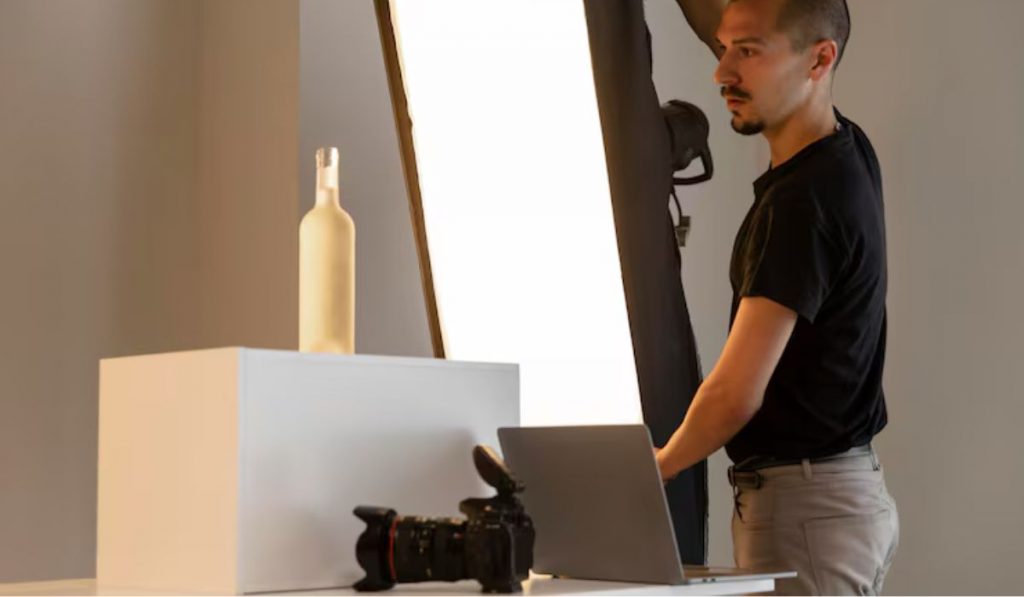
Related reading: Specialist leather goods photography shares many techniques with premium product imaging. See our guide to Leather goods and handbag photography for a deeper look at how our Montreal studio approaches this niche.

Related reading: After hiring a photographer, the next highest-ROI step is making sure your photography actually ranks in search. See our practical guide to image SEO for product photography Montreal for alt text, file names, schema, and Core Web Vitals.

New 2026 Niche Category Guides

Shoot playbooks for categories that don’t fit the standard e-commerce template:

Specialty Pages to Review Before Booking

When evaluating a product-photography partner, reviewing category-specific work is often more useful than reviewing generic portfolios. Here are our newest specialty pages — browse the one closest to your product:

Recently added on the blog (Hiring & Process)

Newer guides covering corners of our Montreal product photography work that connect to this piece:

Related Guides for Brands Hiring a Montreal Product Photographer

If you are evaluating studios, the following guides cover the most common decisions Montreal brands work through during the hiring process:

New on the Studio Blog: 2026 Topic Expansions

We’ve published a new wave of guides covering Quebec cities, neighbourhoods and specialty product-photography niches. Each guide is 1,400+ words with deliverables, pricing and Quebec-specific bilingual considerations.

City & Neighbourhood Guides

Specialty & Niche Photography Guides

New on the Studio Blog (April 2026 Update)

Fresh long-form articles from our Mile-Ex studio — covering Quebec city-level coverage, marketplace-specific image specs, and seasonal Q2 gift programs:

Signs Your Brand Needs Professional Product Photography Services

If product images feel average, sales stay average. If photos fail to grab attention, customers move on fast. At that point, product photography services enter the scene to revolutionize the situation. The use of strong visual content establishes trustworthiness and demonstrates product quality while it encourages users to take action.

Brands invest in great products but ignore how those products look online. That gap costs real money. A clean, sharp, and well-lit image can do more than a long description ever will. So if sales feel stuck, or engagement feels low, chances are your visuals need a serious upgrade. Many growing brands also look for affordable product photography services to improve visuals without increasing costs.

Your Product Images Look Inconsistent

People fail to understand the true importance of maintaining consistent performance. One image appears bright, while another image displays dullness, and the third image shows an alternate background.

A professional setup fixes this quickly. Lighting, angles, and styling stay uniform across every image. That gives your brand a clean and reliable look. In addition, consistency builds trust without saying a word. Customers feel more confident when everything looks sharp and aligned.

product photography services

Your Sales Feel Slow

Sales numbers tell a story. If traffic comes in but conversions stay low, something feels off. Many times, weak visuals sit right at the center of that problem. People scroll, glance, and leave within seconds.

Strong visuals change that behavior. Clean images highlight details and show value fast. Product photography helps customers imagine using the product in real life. Therefore, better images often lead to better decisions and faster checkouts. High-quality ecommerce product images help customers understand products quickly and clearly.

Your Competitors Look More Professional

Take a quick look at competitors. If other brands look sharper and more polished, that creates a problem. Customers compare without thinking twice. Visual quality becomes a deciding factor.

Professional images create a fair chance for every brand. A small brand can look premium with the right setup. Strong visuals help products stand out in crowded marketplaces. Clear and sharp images grab attention very fast. A clean presentation builds trust and shows product value. That small difference often decides which product gets the click.

Your Social Media Engagement Feels Low

Social platforms run on visuals. A weak image gets ignored. A strong image gets shared, saved, and liked. That simple shift changes reach and visibility.

High-quality visuals make people stop scrolling. Clear lighting, bold colors, and sharp details grab attention quickly. Additionally, professional images give more content options for campaigns and promotions. Social media starts to work for you instead of against you.

Want your products to look sharp and sell better?

Upgrade your visuals today.

You Sell on Multiple Platforms

Selling on different platforms brings more reach. However, each platform has its own visual standards. Poor-quality images hurt performance across all channels.

This is where ecommerce product photography services help create images that fit every platform. Clean and optimized visuals work well on websites, marketplaces, and social feeds. In addition, better images improve visibility and ranking on many platforms.

You Struggle With Lighting and Setup

Lighting makes or breaks an image. Poor lighting creates shadows, dull colors, and unclear details. Many brands try to fix this with basic setups and face constant issues.

Professional teams use the right tools and techniques. That includes proper lighting, backgrounds, and angles. On location product photography services also help capture products in real environments. The result feels natural, clean, and appealing.

Montreal Product Photography

You Need High-Quality Images for Marketplaces

Marketplaces demand strong visuals. A weak image gets lost among hundreds of listings. Strong visuals stand out and attract clicks.

An Amazon product photography service focuses on platform-specific needs. Clean backgrounds, clear angles, and sharp resolution improve visibility. Additionally, optimized images help improve product ranking and click-through rates.

Your Images Lack Depth and Interaction

Flat images feel limiting. Customers want to explore products from different angles. A single view often leaves questions unanswered.

Modern solutions like 360 product photography solve that issue. Customers can rotate and explore the product easily. Moreover, interactive visuals improve engagement and build stronger confidence before purchase.

Conclusion

You need to take action when these signs become recognizable to you. Your brand image will change when people see your brand through your powerful visual content. The shift results in people trusting your brand more while they interact with your business and purchase your products. Your business will display itself to the world through your product photography services, which you choose to purchase.

A professional product photographer in Montreal helps brands turn simple products into powerful visuals. Clean images, strong storytelling, and consistent quality create real impact. When visuals improve, everything else starts to move forward.

Montreal Product Photography focuses on creating clean, sharp, and high-impact visuals for modern brands.

Ready to make your products look premium and stand out?

Start building better visuals today.

FAQs

1. When should a brand invest in product photography services?

A brand invests in product photography services when images fail. Poor visuals reduce trust and hurt sales growth. Blurry photos create confusion and weaken product value. Clear images show quality and attract more attention. Strong visuals support better buying decisions. Product Photography Montreal delivers sharp images, clean style, and consistent visuals that build trust and improve engagement across platforms.

2. How do e-commerce product images impact sales?

Strong e-commerce product images shape buying decisions in a big way. Clear photos show product quality and key features quickly. Sharp images remove confusion and guide better choices. Clean visuals make products look more real and useful. Product Photography Montreal creates simple and clear images with strong detail. Better images build trust, increase engagement, and support higher sales across digital platforms.

3. What makes a product photography agency different from DIY photography?

A product photography agency uses professional tools, lighting, and creative direction to produce high-quality images. The DIY setups struggle to achieve proper consistency and detailed results. Product Photography Montreal brings experience and structure to every shoot. That difference shows in the final output, which looks polished, sharp, and ready for serious marketing use.

4. How does E-commerce product photography help new brands grow?

E-commerce product photography helps new brands present products in a clean and professional way. Good visuals establish credibility while making a powerful initial impact. Product Photography Montreal supports new brands with clear and consistent images that match market expectations. This approach helps attract attention and build early customer confidence.

5. Why should brands consider 360 product photography?

360 product photography shows products from every angle. This view gives a clear and real feel. Smooth rotation adds a more engaging experience. Clear views help people understand product shape and details. Strong visuals reduce doubt during product selection. Product Photography Montreal creates clean and smooth rotations. Better visuals build confidence and support faster buying decisions

Ready to Upgrade Your Product Photography in Montreal?

If you have recognized the signs, it is time to act. Here is where to start:

Related guide: Brands ready for professional photography are usually also ready for a proper press kit — see our companion piece on press kit and EPK image sets for brand launches.